Pasadena's hillsides are gorgeous up until gravity, watering, and a winter storm decide to move your soil downhill. A well created keeping wall solves a useful problem initially, then includes structure and style to the landscape. The trick is getting engineering, drain, allows, and ends up to collaborate. After developing and rebuilding walls around Pasadena for several years, I can tell you the difference between a wall that lasts 30 years and one that fractures in three typically comes down to details no one sees.
The Pasadena context: soils, slopes, and seismic reality
Most of Pasadena rests on old alluvial fans that feather out from the San Gabriel Mountains. In plain terms, your backyard might have pockets of coarse gravel a couple of feet far from fat clay that swells when it drinks. In the flats near Victory Park and along Orange Grove, we struck silty sand over clay. In the foothill areas, you'll discover weathered granitic soils with disintegrated rock that condenses well but can ravel on steeper cuts. Layer in irrigation overflow, growing tree roots, and the periodic cloudburst, and you have a constant push behind any wall you build.
Seismic loading matters too. A wall that feels fine under static earth pressure can rack and step throughout an earthquake. In useful terms, we increase reinforcement, tighten up compaction specifications, and take surcharge loads seriously. A fence on top of a wall, a driveway parking pad, or a health club ups the lateral load more than the majority of homeowners expect. This is why walls that look small often helpful resource need real engineering in Pasadena.
Materials that work here and why
A retaining wall is not simply a face. It is a system made from soil, base aggregate, structure, drain, and finish. The visible material sets the tone for your garden design Pasadena, but the efficiency comes from what is buried. I direct customers through products based upon height, spending plan, and the home's architectural style.
Poured in place concrete with a stucco or stone veneer delivers tidy lines for Mid century and modern homes. We form a correct footing, set rebar, and frequently include an essential to withstand sliding. For anything over 3 to 4 feet, this alternative provides strong efficiency with a thin profile, which is useful where area is tight and you desire more room for a paver patio Pasadena.
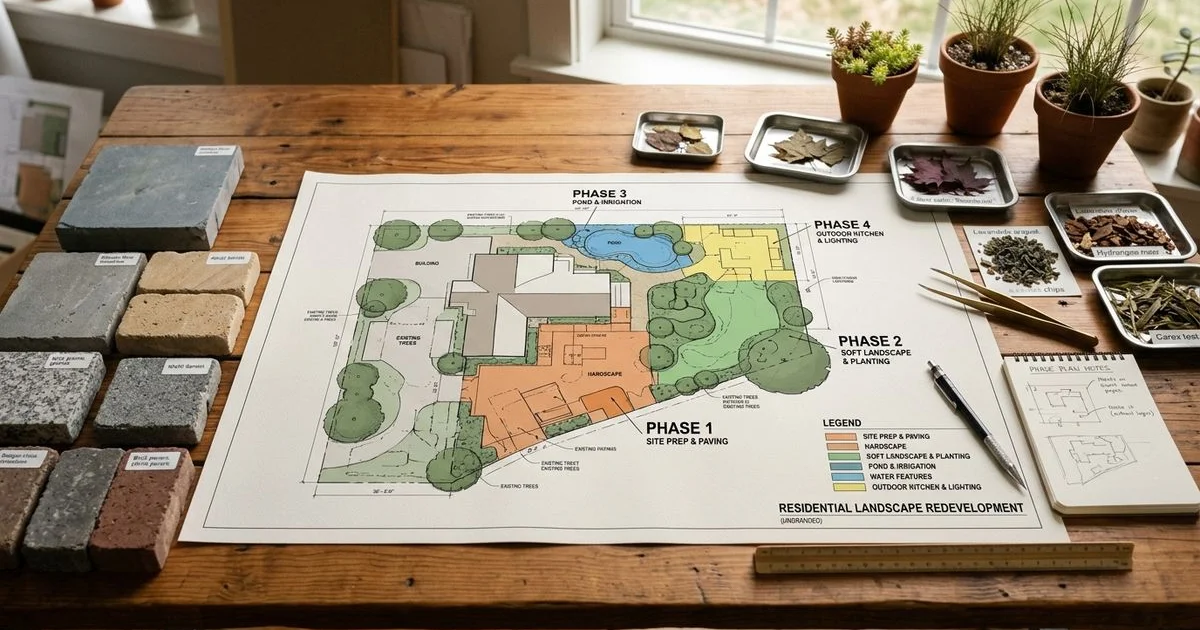
Segmental maintaining wall units, typically called SRWs or modular block, fit many garden jobs because they integrate structural capability with attractive faces. We can go taller with geogrid reinforcement that extends into the kept soil. They bend a bit throughout seismic events and drain well. The variety of textures plays well with rustic Craftsman cottages and Spanish Revival homes. A hardscape builder Pasadena can stage these effectively, which assists cost.
Concrete masonry units with rebar and grout add the heft of a structural wall and offer a traditional course to a smooth or sand float stucco finish. For front yard landscaping Pasadena where you want a low wall that couple with plastered garden walls and clay tile, this fits the local language.
Natural stone looks ageless in Pasadena's historical districts. A mortared stone face on a structural wall offers the visual appeals without depending on the stone for strength. Dry stacked stone fits as a low garden wall in garden landscaping Pasadena, however for genuine earth retention at height, it needs engineered backing.
Gabion baskets, those wire boxes filled with rock, have a modern-day practical ambiance that can soften with plantings. They drain perfectly and work in drainage swales or as erosion control. We utilize them on properties that mix xeriscape landscaping Pasadena with a rugged hillside feel.
Timber is tempting for cost and heat, but termites and rot work fast here. If you must use it, treat it as a short-lived solution and keep it low. Many homeowners move to masonry or block once they weigh replacement cycles.
Anatomy of a reliable maintaining wall
Think in layers from the bottom up. The base sets whatever. We dig to undisturbed soil and construct a compressed gravel leveling pad. On a lot of tasks under 6 feet, the base is 6 to 12 inches thick of 3/4 inch crushed rock, compressed to 95 percent relative compaction. A put concrete wall will generally have actually a reinforced footing, width and density sized by engineering. For SRW blocks, the very first course sits dead level on that rock bed. If that first course is off by a quarter inch, the error telegraphs throughout the whole wall, and you see it forever.
Backfill is foreign dirt. Behind the wall we place a drain zone, often 12 to 24 inches of tidy, angular gravel. A perforated drain pipeline sits at the bottom of that zone, daylit to a slope or tied into a drain system. The rest of the backfill must be a complimentary draining pipes soil, not expansive clay. When we need to utilize site soil, we separate it from the drainage zone with filter fabric so fines do not clog the rock.
Reinforcement depends upon the system. For SRW walls, geogrid layers extend back into the soil, commonly 0.6 to 0.8 times the wall height, placed at specified periods. For CMU or poured walls, the reinforcement is rebar sized and spaced per design. Where slopes above the wall or loads add pressure, the support schedule boosts. These are not guesses. A retaining wall builder Pasadena need to have the ability to show the stamped plan or, for smaller gravity walls, a maker's style sheet matched to your site.
Finish details protect the structure. Waterproofing on the soil side of a concrete wall, a cap with drip edge, sealant at veneer terminations, and properly raised grade away from the wall face all battle water intrusion and staining. In the dry heat of summer, UV breaks down some materials and plastics, so we cover exposed geogrid tails quickly and backfill as we go.
Drainage is the distinction between success and failure
Water is relentless. It includes weight behind the wall, increases pressure, and brings fines that block systems. The answer is redundant drain. I prefer a 2 line technique. A perforated pipeline at the base of the wall for main relief, and if the wall is high or the site is wet, a secondary pipeline a foot greater as a security. Weep holes on strong concrete or CMU walls add a various path. Those openings require bug screens and a clear outlet.
Surface water management is simply as crucial. Landscape drainage Pasadena frequently gets volume during storms that roll off surrounding roofing systems and driveways. Swales that obstruct and redirect runoff away from a wall keep the backfill dry. If you are integrating a new paver patio Pasadena, set the grade so the outdoor patio sheds to a drain basin or a vegetated area rather than to the wall. French drains pipes that discharge to nowhere do not resolve anything. The outlet must emerge at a lower elevation where water can dissipate securely, typically into the yard drainage Pasadena system or a curb outlet authorized by the city.
One more Pasadena particular note. On lots with fully grown oaks and sycamores, roots will go after water. A covered and sloped drain, plus root barriers in strategic zones, prevent invasion that splits pipelines and undermines backfill.
Permits and codes in Pasadena
Homeowners are frequently stunned how quick a small wall ends up being a permitted structure. In Pasadena and throughout California, any maintaining wall 4 feet or taller determined from the bottom of footing to top of wall normally requires a structure permit. If there is a surcharge on the wall, such as a slope above, a driveway, a swimming pool, or a fence, an authorization can be required even listed below 4 feet. The city will often request for structural calculations and a website strategy. On hillside lots or for taller walls, a geotechnical report might be necessary.
Setbacks from residential or commercial property lines, height limits in front lawns, and exposure triangles near driveways all influence what you can develop. If a wall rests on or near a property line, coordinate with your neighbor early. A shared wall contract avoids headaches. For drainage, Pasadena wants water dealt with on site when useful, and any discharge to the street need to be managed and permitted.
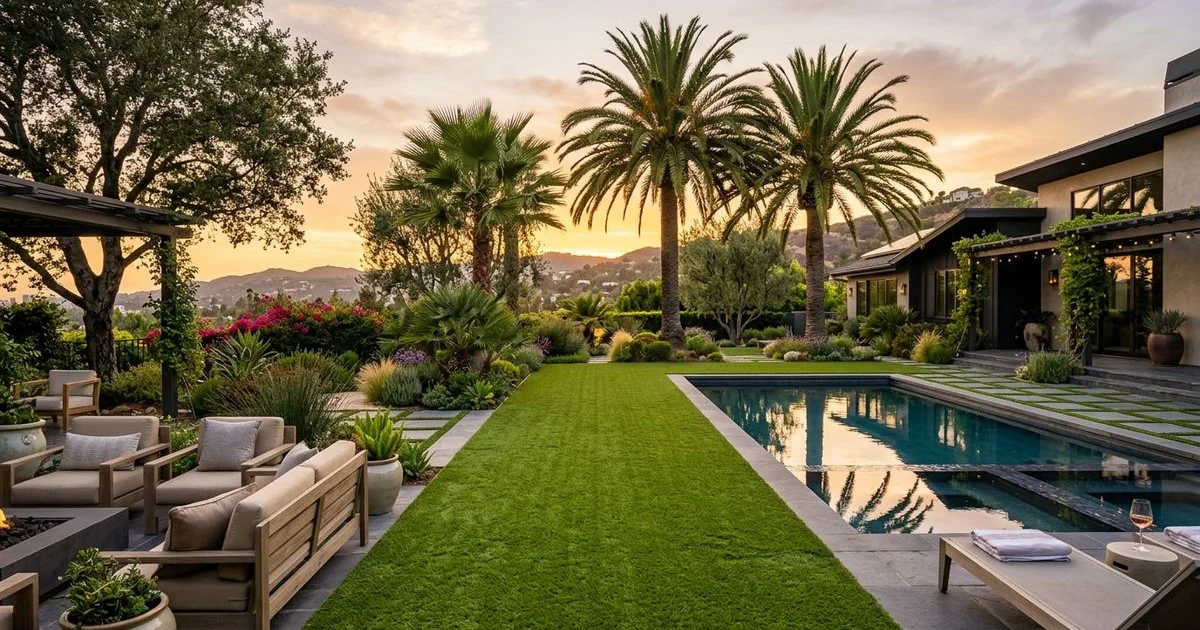
Here is a succinct authorization trigger examine you can run before style moves too far:
- Height at or above 4 feet when determined from bottom of footing to top of wall Any additional charge at the top, consisting of fences, car loads, slopes, or structures within a range equivalent to the wall height Tiered walls where the upper wall is set back less than twice the height of the lower wall Walls within required setbacks or in presence zones near driveways and intersections New or modified drainage outlets to the street, or operate in a designated hillside area
An excellent drainage contractor Pasadena will align the wall strategy with the website's stormwater course from the start. When your retaining wall installation Pasadena also includes paver work, synthetic grass installation Pasadena, or patio construction Pasadena, send a collaborated strategy set. It saves time during evaluation and keeps inspections smooth.
How much it costs and where the cash goes
Numbers vary, however a beneficial range for expertly constructed keeping walls in Pasadena runs from the low hundreds per direct foot for low gravity SRW walls as much as four figures per foot for crafted, reinforced, veneered structures on complex websites. Excavation, export of spoils, and gain access to can add as much as the wall itself. When a yard sits behind a narrow side backyard and we require to move every bucket of soil with a tiny loader or perhaps wheelbarrows to safeguard a fully grown garden, production slows. If we find undocumented rubble in the slope, we invest hours arranging it out to produce a steady subgrade.
Permit costs, engineering, and compaction screening are wise line products, not bonus. They lower danger and raise resale value. For a wall that also supports an outdoor patio or an outside kitchen area, the included expense of much better reinforcement and waterproofing spends for itself when you prevent fractures through your brand-new tile or stained stucco a year later.
Construction flow that prevents rework
A clean series avoids surprises. Site evaluation precedes. We flag utilities, probe for soil shifts, and mark trees we will safeguard. Demolition and excavation follow, with overdig to permit working space behind the wall for drain and geogrid. Base preparation gets mindful attention, then we begin structure. For SRW, we set the very first course, level and align, then build up and place geogrid and backfill in lifts, condensing each layer. For put or CMU walls, we set types or block, location rebar, call for examination, then pour or grout. Waterproofing, backfill, and drainage connect next. Only then do we transfer to veneer, caps, and nearby hardscape.
Compaction is validated, frequently with a compaction test for taller walls. You can not compact effectively in 18 inch lifts. We keep lifts to 6 to 8 inches, more in tight spaces. Compaction failures show up later as settling caps, cracking stucco, and out of level paver edges. A hardscape company Pasadena that runs a plate compactor and leaping jack with discipline will provide a steady finished plane.
Matching the wall to the home and garden
Pasadena's architecture is a gift to landscape designers. A Craftsman cottage in Cottage Heaven sings with a low split dealt with block or a tumbled stone veneer that gets the warm tones of river rock patio piers. Spanish Revival requires cream or sand colored stucco with a bullnose or stone cap, paired with clay tile and hand painted tile insets at actions. Mid century modern loves smooth concrete, board formed patterns, or thin linear ledgestone with crisp steel edging and a grid of synthetic turf Pasadena for a tidy lawn look that sips water.
Planting strengthens the wall's line. A drought tolerant garden Pasadena makes its keep in summer season and still brings texture. Foothill natives like Arctostaphylos and Ceanothus hold slopes and stay lean. Mediterranean shrubs and decorative lawns soften gabions or obstruct faces. Water wise landscaping Pasadena Ridgeline Outdoor Living can set up drip watering that really complements the wall by keeping the backfill drier and providing exact water to plants out front.
Where the wall creates a terrace, consider that flat space a purpose. A paver contractor Pasadena can lay a patio area with permeable joints that move water to a subdrain rather than to the wall. Pair a little seat wall with a fire function to craft outdoor living spaces Pasadena that extend the home's square video footage. On narrow side yards, a raised planter versus a retaining wall draws the eye up and makes the passage feel like a designed courtyard instead of a corridor.
Integrating synthetic grass and pavers without hurting the wall
Artificial turf Pasadena has actually come a long way. It looks tidy, reduces water utilize, and remains usable in winter. The catch is edge information. If you run turf right approximately a retaining wall cap, water from rinsing or rain can wick against the cap and stain it. We detail a narrow gravel border, even an inch or two, to break capillary action and offer water a location to go. For synthetic turf Pasadena, the base should be well compressed, but do not produce a difficult pan that traps water against the wall. A mild slope to a drain inlet fixes that.
For hardscape installation Pasadena, we prepare expansion joints and motion joints at the user interface with a concrete wall to handle thermal growth. A paver edge restraint parallel to the wall keeps the pavers tight without counting on the wall as a restraint, which minimizes point loads versus the face. Patio design Pasadena Ridgeline Outdoor Living often consists of lighting and irrigation sleeves Ridgeline Outdoor Living Co beneath, and those avenues should cross under the base, not through the wall.
Maintenance that keeps the wall young
A good wall is low maintenance, not no maintenance. As soon as a year, walk the length and examine the outlets for your drain pipes. Clear leaves and mulch that can obstruct weep holes. Look for signs of settlement at caps and hairline fractures at stucco or mortar joints. Early hairlines often stop growing after the first seasonal cycle. If they expand or creep, bring a professional to evaluate movement.
Irrigation modifications protect the wall. Grass heads that throw directly on the face stain and motivate efflorescence. After synthetic grass installation Pasadena, be deliberate when rinsing pets and spills. A very slow pipe drip over hours at the toe of the wall is even worse than a heavy rain that runs off quickly.
Tree roots push and pry. If a sapling volunteers right behind a wall, eliminate it while the root is small. For valued trees near a wall, root prune under an arborist's guidance before construction. Prevention is constantly cheaper than repair.
Common mistakes I still see
The wall looks straight and crisp on the first day, but months later on stains, breaking, and tilts appear. The pattern repeats when specific faster ways are taken. Backfilling with the same clay that came out of the hole is a big one. The soil broadens when damp, locks in behind the wall, and never ever lets water circulation to the drain. Another classic is a single low drain pipeline that is perfectly level so it never ever drains pipes. We aim for a minimum 1 percent fall on outlets. Tiered walls stacked too close together function as one high wall without the engineering to match. Finally, fences anchored through caps into hollow cavities invite rot and wobble. We set fence posts in independent footings behind the wall or style the wall to take fence loads.
When you require engineering and when you do not
Not every wall needs a stamped plan, but lots of do. If the wall is above 3 feet with a slope at the top, if there is a driveway or structure near the top, if the soil is extensive, or if the wall is terraced without sufficient problem in between tiers, bring in an engineer. It includes cost, however it conserves you from removing a non allowed wall if the city flags it later on, and it decreases liability if the wall supports anything people use.
For low garden walls that hold a planting bed a foot or 2 high, especially in backyard landscaping Pasadena where loads are light, standard details from block manufacturers and best practices from a seasoned hardscape builder Pasadena keep you on strong ground.
Choosing the right partner
Credentials matter. Search for a retaining wall builder Pasadena with a portfolio of jobs that look like your site, not just quite face shots. Ask to see in development photos that reveal base, drainage, and support. If the contractor likewise functions as your outdoor living contractor Pasadena Ridgeline Outdoor Living, you gain coordination throughout walls, pavers, lighting, grass, and planting. One hand draws the grades and the other installs them. That avoids water from being everybody's afterthought.
It likewise helps to select a team that comprehends design. Luxury outdoor living Pasadena is not simply bigger budgets. It is tighter tolerances on stone, exacting stucco finishes, concealed drains pipes, and lighting that frames the architecture. Luxury landscape design Pasadena Ridgeline Outdoor Living deals with the wall as part of a structure, not an isolated things. The best landscape contractor Pasadena for you will be the one who asks early about how the area will be utilized, what lives above and listed below the wall, and how water crosses the residential or commercial property in January, not July.
A quick material photo for common Pasadena scenarios
- Contemporary hillside outdoor patio where area is tight: poured concrete wall with waterproofing and a plaster or board formed finish, slim cap, integrated step lights Craftsman front backyard with low terraces: split dealt with SRW units with tumbled texture or CMU with smooth stucco and stone cap to echo porch details Spanish Revival garden: strengthened CMU with sand float stucco, bullnose cast stone coping, tile insets at stair risers Rustic, water sensible slope: gabion baskets with native boulders, planted pockets of drought tolerant garden Pasadena types, broken down granite paths Budget friendly garden planter: modular block gravity wall under 3 feet, clean gravel backfill and daylighted drain, prepared for a paver patio Pasadena adjacent
A quick field note
We rebuilt a stopping working wall behind a 1920s Spanish on a narrow lot in the Linda Vista location. The original was a mortared river rock face without any drain. After a wet winter, white stains and bulges appeared. The property owner wanted the very same appearance without the risk. We built a reinforced CMU wall, waterproofed the back, added a double drain line daylit to a swale, then veneered the confront with hand selected stone. We set a cast stone handling a 1 inch overhang and a crisp drip kerf. The wall reads as original to your home, now the first excellent storm sends a stable ribbon of water out the drain outlet for a couple of minutes, then it is peaceful again. That is the noise of a wall breathing.
Tying it into the larger plan
A retaining wall is rarely the only project. If you are preparing hardscape design Pasadena with brand-new patios, courses, or a little seating balcony, design the grades and walls together. Outdoor living design Pasadena benefits from early decisions about actions, seat walls, and where furniture will sit. If the wall produces a terrace large enough for a grill and dining table, consider wind and shade, and plan a gas stub and electrical before the wall is backfilled. For water wise landscaping Pasadena Ridgeline Outdoor Living, incorporating weather condition based watering and a mulch information at the wall base reduces evaporation and keeps the face clean.
Finally, think upkeep and security. Lighting in wall caps along steps keeps guests sure footed. A modest steel railing set behind the cap, not through it, preserves waterproofing. If kids use the terrace, guardrails fulfill code without dominating the style when they align with planting pockets and vertical elements.
Building a keeping wall in Pasadena is part engineering, part craft, and part choreography with the remainder of the site. When products, allows, drainage, and design all line up, the wall fades into the garden and merely does its task. Years later, the caps are still level, the face is tidy, the drains pipes run clear after a storm, and the space above feels like it was always meant to be used. That is the goal whenever we put a shovel in the ground.
Business Name: Ridgeline Outdoor Living
Address: 845 E Walnut St, Pasadena, CA 91101, United States
Phone: (626) 469-5822
Ridgeline Outdoor Living
Ridgeline Outdoor Living is a Pasadena-based landscape design-build company serving Greater Los Angeles with custom outdoor living, hardscape, and drought-tolerant landscape solutions. The company specializes in patios, retaining walls, outdoor kitchens, drainage, hillside projects, and turnkey landscape construction, handling projects from design and permitting through final build and warranty.
845 E Walnut St, Pasadena, CA 91101, USA
Business Hours:
- Monday – Saturday: 8:00 AM – 6:00 PM
- Sunday: Closed
Follow Us: