Water shortage puts pressure on every square foot we plant in Pasadena. Yet a well prepared xeriscape does more than conserve water, it cools outside spaces, anchors slopes, softens architecture, and brings pollinators back to the block. I have actually seen front backyards that once baked under worn out turf end up being low irrigation ecosystems that require a fraction of the upkeep. The trick is getting proportions right, letting the website lead, and dealing with every stone, mulch choice, and plant as a piece of a long term system.
Start with Pasadena's microclimates, not a Pinterest board
Pasadena is not one consistent climate. You can feel the difference between the flats near the Arroyo, the tree lined streets in Madison Heights, and the foothill areas that capture late afternoon heat. Summer season highs frequently press into the 90s, winter nights can dip into the 40s, and annual rains swings hugely, frequently between 12 and 22 inches. The winds matter too. Santa Ana occasions can desiccate brand-new plantings in a day if your irrigation is not tuned.
Soil on numerous lots is an alluvial mix of loam, with pockets of decomposed granite and clay lenses that hold water longer than you anticipate. I bring a shovel and tube to the very first visit. If a hole drains pipes slower than an inch an hour, that tells me to develop for surface area flow, choice types that endure occasional sogginess, and budget for soil change or subsurface drainage. Understanding the regional Model Water Effective Landscape Ordinance limits, along with Pasadena's watering day schedules, sets expectations for how we'll water and mulch.
A useful sequence for getting it right the very first time
I have actually seen lots of projects stall because individuals leap to plant shopping before they understand the site. Keep the early procedure short, disciplined, and visual.
- Map sun, shade, and slope, then sketch water circulation throughout a big storm. Test soil texture and drain, then mark locations that hold water. Decide flow and living zones before you speak about plants. Set the stone and mulch combination so the plants can balance with it. Choose plant neighborhoods in groups, not one by one, matching hydrozones.
That 5 step rhythm keeps the style truthful. It also assists when you interview a patio contractor Pasadena or a hardscape builder Pasadena, since you can reveal them where surface water landscaping Pasadena CA goes, where you prepare a paver patio Pasadena, and which slopes will need keeping wall installation Pasadena.
Stones that look regional and last
Rock does heavy lifting in a xeriscape. It forms grade, slows runoff, safeguards root zones, and frames outside living areas. The incorrect stone glares, the right stone disappears into the setting by noon. In Pasadena, native granitics, warm river rock, and weathered basalt checked out as genuine. Plume and tone matter. A patio area of pale limestone next to a stucco cottage frequently reflects excessive heat. A driveway border of dark trap rock can cook neighboring sages. I ask clients to look at stones completely sun at 2 pm in August. If your eyes squint, we revise.
Use different scales of stone with intent. Boulders must do structural or visual work, not sit like mushrooms. Set them a little below grade, tilting into the slope as they would on a hillside. Inch to 3 inch river rock operates in bioswales and dry creek beds that bring roofing system overflow to a safe outlet. Broken down granite with a stabilizer binds for walkways that feel natural underfoot. For garden paths that meet ease of access needs, compacted DG at 2 to 3 inches over Class II base holds up, and it cools faster in the evening than strong concrete.
Hardscape style Pasadena lives or passes away on the interface lines. Where DG meets a planting bed, add a steel edge or a soldier course of pavers to keep the line crisp. If we are transitioning to a raised balcony, a single 6 inch riser edge with a bullnose paver softens the action and lowers toe stubs in the evening.
Mulch is not design, it is moisture insurance
In our heat, bare soil is a water loss device. Mulch slows evaporation, buffers temperature level swings, and safeguards soil microorganisms. I like a layered approach. A mineral mulch, such as 3/8 inch gravel or pea stone, does best around artemisia, cacti, agaves, and desert mounding perennials, keeping crowns dry and avoiding rot after storms. Shredded arbor mulch matches chaparral types like manzanita and ceanothus if you keep it a number of inches back from the primary stems. For bioswales and anywhere with focused circulations, choose a cracked mulch, not shredded, so it does not drift away during a 10 year storm.
Ignore blanket guidelines. Many Pasadena gardens function with a mosaic: gravel pads under barrels and grills, wood chips beneath fruit trees, and crushed stone around foothill locals. Depth matters more than brand name. 2 to 3 inches usually hits the balance point. More than that can suffocate crowns, trap moisture against woody trunks, and welcome fungus.
Plant communities that thrive with less
Xeriscape does not mean zero watering. It means ideal plant, ideal location, and the savvy to water deeply, then let roots hunt. Believe in neighborhoods with comparable requirements, instead of one offs. Organizing likewise settles in upkeep, due to the fact that you will not go after a thirsty azalea through a drought tolerant garden Pasadena.
Here are 5 trustworthy plant groups for Pasadena xeriscapes, each with a various state of mind and function:
- Foothill chaparral mix: Ceanothus 'Ray Hartman' or 'Yankee Point', Arctostaphylos 'Howard McMinn', Salvia apiana. Includes structure, spring bloom, and bird cover, with minimal summertime water once established. Mediterranean workhorses: Salvia 'Pozo Blue', Lavandula x intermedia, Rosmarinus 'Huntington Carpet'. Fragrant, hard, and forgiving throughout heat spikes. Coastal sage scheme: Salvia clevelandii, Artemisia californica, Eriogonum fasciculatum. Hums with native bees and holds slopes with fibrous roots. Desert punctuation: Agave parryi, Hesperaloe parviflora, Dasylirion wheeleri. Exceptional near stone, provides all year kind and low litter. Woodland edge for filtered shade: Ribes viburnifolium, Heuchera 'Wendy', Muhlenbergia capillaris. Helpful under recognized oaks if you prevent summertime watering at the trunk line.
I like to sew these groups with grasses. Muhlenbergia rigens in drifts checks out modern-day, yet it is a California native that handles reflected heat. For color, narrow the combination instead of spray a rainbow. 2 echoing tones repeated throughout the lawn looks developed. Believe blue gray from agaves and lavenders, paired with the copper plumes of Pennisetum or the pink of penstemon in spring.
Irrigation that matches the plants instead of the other way around
Drip is not optional in most xeriscapes here, it is the backbone. Run devoted hydrozones with their own valves so you do not drown low water sages while rescuing a citrus tree. I choose inline drip for massed groundcovers, with 0.6 gph emitters spaced at 12 to 18 inches, buried just below the mulch to minimize UV breakdown. For shrubs and perennials, button emitters let you increase or reduce flow as plants mature.
Set the system to water deeply and rarely after facility. On a south dealing with front yard landscaping Pasadena, you might run 45 to 60 minutes once a week in July for locals, then taper to once every 2 to 3 weeks by the 2nd summertime. Monitor with a soil probe, not uncertainty. Include a clever controller with a local weather condition feed and a rain sensor. If you rely just on a schedule, a hot September or a cool May will toss the whole garden off.
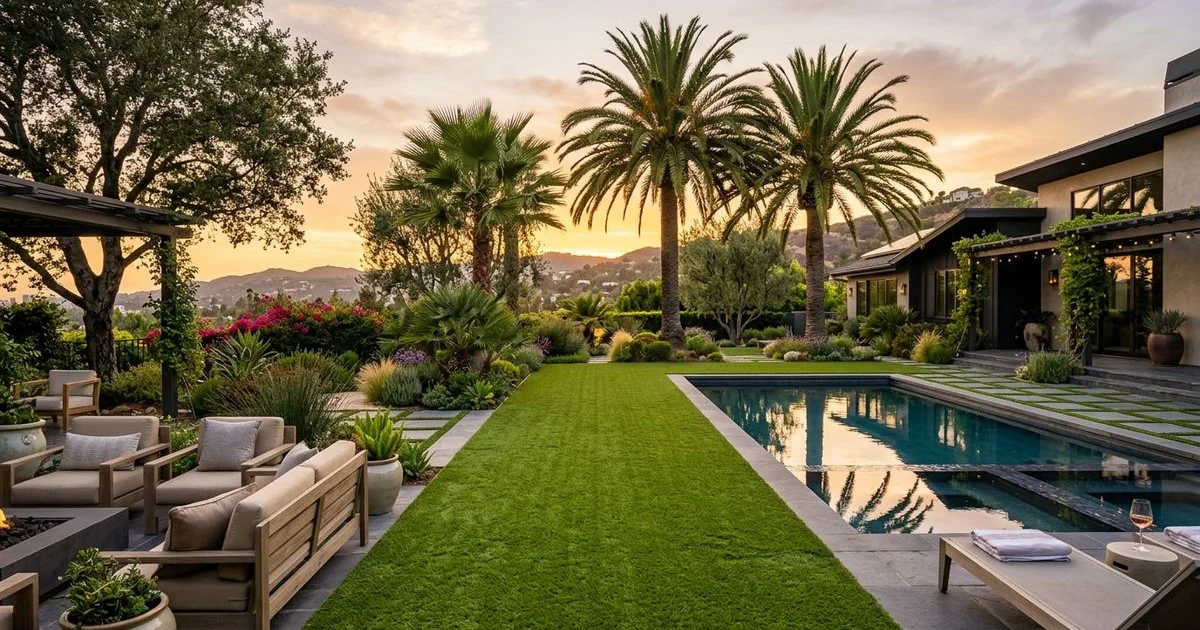
Avoid overspray near DG paths. Micro sprays are tempting for quick green up, but the moisture plus dust produces concrete every summertime. Keep turf, if you have any, by itself zone with matched precipitation heads. Better yet, if a client loves the look of lawn but not the upkeep, a small pad of artificial grass Pasadena, set up with a permeable base and high quality infill, can carry out well, specifically in a tight yard where kids play.
Drainage keeps the garden alive during storms
A great deal of xeriscapes fail not from drought, however from that one climatic river in January. Strategy where water goes on day one. A competent drainage contractor Pasadena will survey elevations, set correct fall away from structures, and style catch basins that connect to a curb cut or dry well. I have actually seen yards where a brand-new paver patio sent sheet flow straight into a neighbor's garage. Fixing it after the truth costs triple.
Surface services are typically the most trusted. A shallow swale can carry roofing system water across a lawn to a rock filled basin that functions as an accent. Use cobble sized stone at bends so water does not undercut. If you do set up subsurface pipeline, specify strong sections under trees to prevent root invasion, and add cleanouts. For landscape drainage Pasadena on hillsides, do not forget the uphill next-door neighbor. A simple interceptor drain at the back fence, combined with a grasscrete strip or permeable band at the toe of a slope, relieves hydrostatic pressure before it hits your maintaining wall.
Where hardscape and plants meet
The best outdoor home Pasadena feel cool underfoot, shaded overhead, and green at the edges. Hardscape design Pasadena must constantly remain in service to those experiences. In little lots, add a ribbon of planting between a terrace and the home line so that reflected heat has someplace to soften. A 24 inch deep bed can hold a row of rosemary or lomandra against a wall, cooling it several degrees in summer.
For patio construction Pasadena, pick surface areas with texture for safety and heat convenience. Toppled concrete pavers in lighter earth tones stay cooler than smooth colored concrete. An excellent paver contractor Pasadena will compact the base in lifts, pull string lines tight, and set a mild 1 to 2 percent slope away from the house. Detailing the edges is not fluff. A soldier course frames the field, withstands creep, and gives your vacuum a clean line on Saturday morning.
Retaining wall installation Pasadena is typically needed along the foothills or to carve functional space in a lawn that falls off the back door. Step the wall along the grade instead of force a single monolithic face. Integrate weep holes and, when required, a subdrain to shed water pressure. A retaining wall builder Pasadena who uses geogrid and compaction properly purchases you years of stability. Planting the confront with native turfs and tracking sages helps the structure sit conveniently in the scene.
Artificial grass, the right way
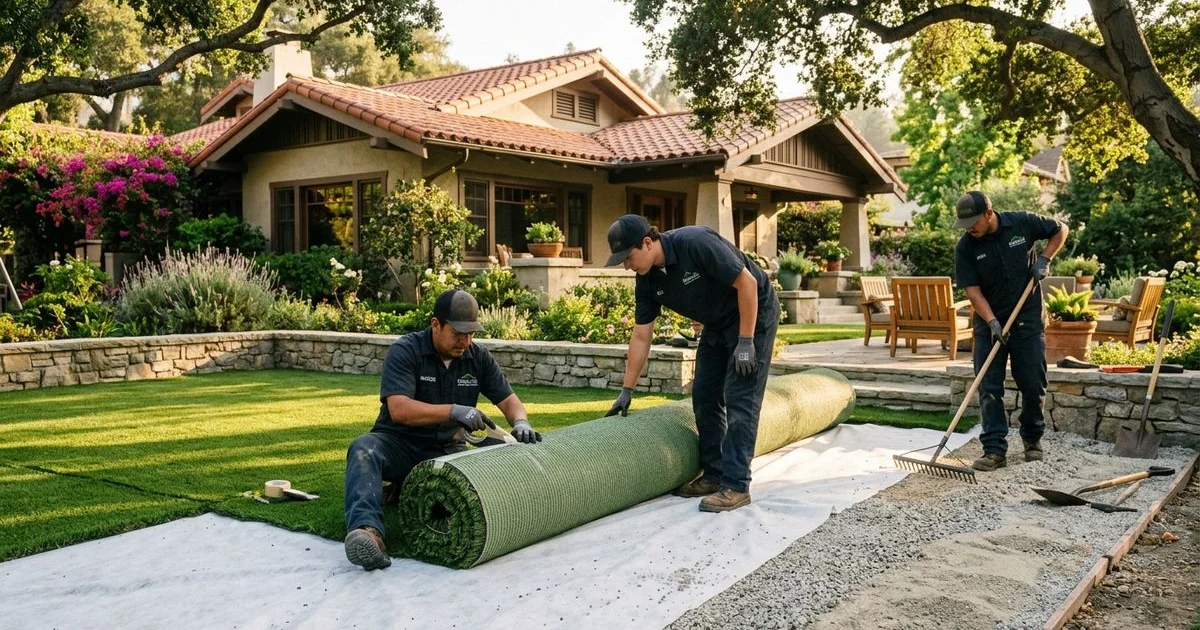
Synthetic grass Pasadena has its place if done thoughtfully. Use it where shade or play demand a constant surface, not as a blanket over the entire lawn. Pick an item with heat decrease innovation and a multi toned fiber that imitates genuine turf. Avoid bright lime green. The base is the make or break detail. A 4 to 6 inch compressed Class II road base, followed by a permeable bed linen layer, keeps the surface area smooth and drains well after storms. Synthetic grass installation Pasadena ought to likewise attend to edging. Steel or paver edges keep seams tight and stop mulch migration. For pet locations, pick antimicrobial infill and prepare a hose pipe bib inside reach.
Case notes from a Pasadena bungalow
A 1920s Spanish bungalow in Cottage Paradise came with a passing away front lawn, a narrow concrete walk, and a single jacaranda. The owners wanted a low watering backyard that still felt soft and inviting. We lifted the yard and installed a meandering DG course, 36 inches wide for a comfortable set walk, edged with a flowing of recovered clay brick that matched the house steps. Two basalt boulders, each sunk a third into the ground, anchored the corners.
Planting organized into communities. On the hot western exposure, Agave parryi landscaping guidelines punctuated a gravel bed with Salvia clevelandii and Eriogonum fasciulatum. Along the shadier east wall, Ribes viburnifolium and Heuchera developed a woodland edge under filtered light. In spring, penstemon sent up coral spikes that echoed the clay roof tile. Drip hydrozones separated the shade bed from the bright slope. Mulch shifted from gravel near the agaves to shredded arbor mulch under the ribes. The city's refund assisted offset the grass elimination. A small basin obstructed downspout water and spilled into a rock lined swale that crossed the backyard, an easy pass during storms with hidden stepping stones simply underneath the gravel.
Neighbors told the owners the backyard seemed like Pasadena, not a desert theme park. That, to me, is success.
Maintenance that respects the design
A xeriscape is not zero work, it is smarter deal with a calmer schedule. Weed pressure is highest the very first six months after set up, when soil is disrupted and mulch has not totally settled. A regular monthly hand pull session pays off more than a single blitz later on. Prune locals lightly after flower, not continuously. Deep water trees in late summer if you see stress, even in a low watering garden. Revitalize DG walkways every couple of years with a light top up. Watch for mulch creep throughout big storms and rake back from crowns.
If you included a paver patio, a polymeric sand sweep every couple of years keeps joints locked. For drain, lift catch basin grates before the first big winter rain, clear any sediment, and check cleanouts. Little routines keep the bones working.
Cost, options, and what moves the needle
People typically ask what a front yard xeriscape expenses. The range is broad. If you keep existing grade, design a modest planting scheme, usage DG for tracks, and limit stones, a small to medium front yard landscaping Pasadena might fall in the 20 to 45 dollars per square foot range, consisting of drip irrigation and mulch. Include a paver outdoor patio, lighting, a low keeping wall, and a custom-made steel edge, and the price can step to 60 to 100 dollars per square foot, depending on access and website intricacy. Luxury outdoor living Pasadena tasks with outdoor kitchens, shade structures, and engineered walls go higher, but those are various conversations.
What changes the budget plan most is hardscape volume, site gain access to, and whether we require significant yard drainage Pasadena improvements. Plant size is a lever. Utilizing one gallon natives with a couple of tactical 5 gallons conserves money now and frequently leads to much healthier stands in 2 years. If you are client, you get a better garden and you invest less.
Permits, codes, and good neighbors
Most xeriscapes do not require an authorization for planting or mulch, however outdoor patios, gas lines, electrical, and maintaining walls above certain heights do. Pasadena follows California's Model Water Effective Landscape Ordinance, which impacts irrigation design for larger tasks. If you are changing more than 2,500 square feet of landscape, you may activate additional documents. Property owners associations vary. Bring them early diagrams of the plant palette, stone samples, and a picture board showing mature size. It is much easier to get approval for garden landscaping Pasadena when choice makers can picture a result that is neat, restrained, and water wise.
Common errors and how to avoid them
I see the same mistakes once again and again. People overplant since the backyard looks sparse on day one. In a year, the sages swallow the sidewalk. Leave area. Nature fills. Another mistake is mixing high water and low water plants in the very same bed, then compromising both with a middle watering schedule. Keep hydrozones truthful. Some set up reflective stone all over, then question why the outdoor patio feels like a griddle in August. Check your products in full sun. Finally, too many brand-new gardens avoid correct compaction under pavers or DG, which shows up as ruts and puddles. Hire a hardscape company Pasadena that owns a plate compactor, understands base depths, and is fussy about slopes.
How hardscape and planting assistance habitable spaces
Outdoor living style Pasadena benefits when every option cools the microclimate. A pergola with an open lath, planted with native grape or crossvine, knocks 10 to 15 degrees off a west facing balcony throughout summertime afternoons. A water wise planting strip flanking a seat wall breaks up convected heat. Even small front patios gain convenience if a low hedge, like Westringia or dwarf acacia, filters hot winds. Place grills and fire functions on the downwind side of a seating location to avoid smoke from washing through the conversation.
A seasoned patio contractor Pasadena will stabilize circulation with intimacy. They will recommend a 36 inch clear path at a minimum, widen to 48 inches where visitors will pass with plates and drinks, and keep dining terraces big enough to pull out chairs without stepping into plant beds. Those practical inches preserve the plants and your ankles.
Choosing the ideal partner
The best landscape contractor Pasadena for a xeriscape is the one who respects both the gardening and the hardscape. Ask to see constructed work after a summertime and after a winter. If the plants look delighted and the DG still drains pipes, you have actually discovered a pro. For integrated work that consists of outdoor patios, walls, and planting, a hardscape builder Pasadena who works together with horticulturists keeps watering lines out of footings, locates low voltage keeps up future maintenance in mind, and sets grades to shed water where the plants can accept it.
If you are checking out patio design Pasadena Ridgeline Outdoor Living incorporates the stone palette with planting in such a way that checks out as one garden, not a collection of tasks. As an outdoor living contractor Pasadena Ridgeline Outdoor Living understands how small relocations, like the orientation of a bench or the color of a paver, change comfort on a 95 degree day. The firm's water wise landscaping Pasadena Ridgeline Outdoor Living technique sets hydrozoned drip systems with plant communities that earn their keep. For properties seeking luxury landscape design Pasadena Ridgeline Outdoor Living, the goal is still restraint and regional fit, simply with raised products, refined detailing, and long horizon durability.
Final recommendations for Pasadena homeowners
Keep the vision basic and the products sincere. Choose a stone that looks like it belongs in the San Gabriel foothills. Usage mulch as a tool, not a decorative afterthought. Group plants that want the same treatment and give them time to settle. Make drain noticeable and trusted. Choose a paver contractor Pasadena who will show you their base layers and a retaining wall builder Pasadena who talks as much about soil and water as they do about blocks.
When a xeriscape comes together, you feel it before you see it. Afternoon walks run cooler. Bees and birds appear in spring. You invest less time battling weeds and more time using the space. That is the worth of getting stones, mulch, and native plants right, in Pasadena's sun and on Pasadena's soil.
Business Name: Ridgeline Outdoor Living
Address: 845 E Walnut St, Pasadena, CA 91101, United States
Phone: (626) 469-5822
Ridgeline Outdoor Living
Ridgeline Outdoor Living is a Pasadena-based landscape design-build company serving Greater Los Angeles with custom outdoor living, hardscape, and drought-tolerant landscape solutions. The company specializes in patios, retaining walls, outdoor kitchens, drainage, hillside projects, and turnkey landscape construction, handling projects from design and permitting through final build and warranty.
845 E Walnut St, Pasadena, CA 91101, USA
Business Hours:
- Monday – Saturday: 8:00 AM – 6:00 PM
- Sunday: Closed
Follow Us: